Dan Soderberg Photography

The California
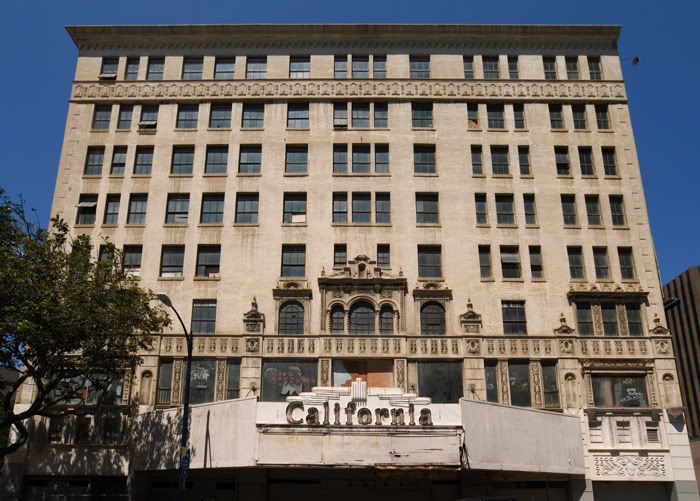

Two old grand movie palaces survive in San Diego. Happily the Balboa in Gaslamp has been returned to her former glory after decades arduous effort to gain preservation. Sadly The California sits in utter dilapidation. In the words of an urban poet: “She’s a wounded survivor, limping but displaying her teeth.”
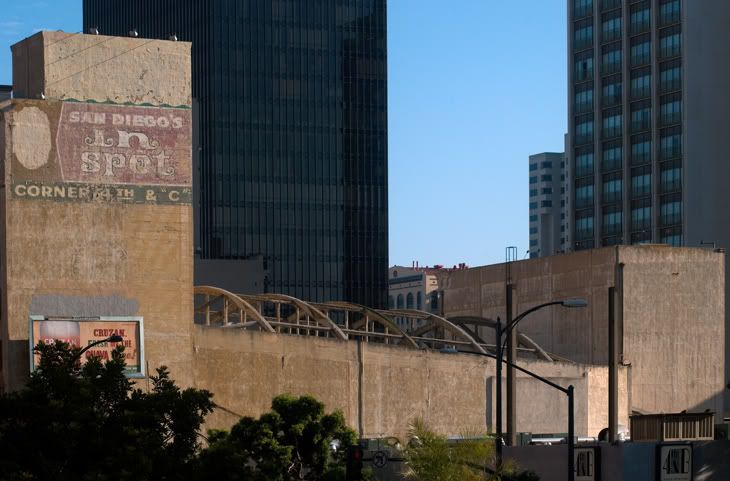
Showing its teeth, or from this view, showing its bones–the bow string truss. Likely the truss wasn’t visible before an adjacent building was razed.

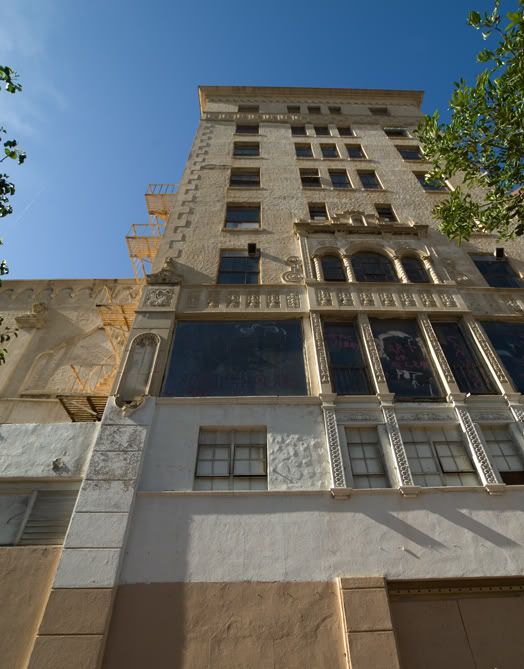
The “In Spot” ad is painted on the theatre entrance and office tower along Fourth Avenue. That portion is nine stories high. The auditorum stands nearly five stories high and contains 2,200 seats. The proscenium area facing third avenue is six stories high.
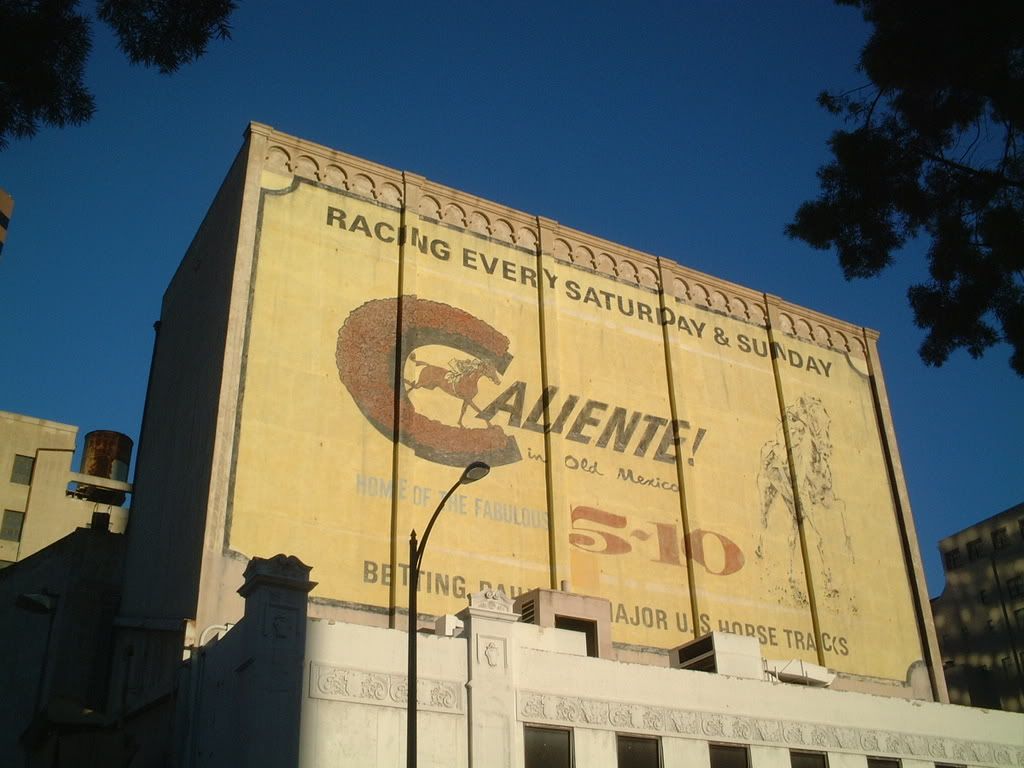
I don’t recall a time in my life when this Caliente billboard wasn’t on the back side of the proscenium structure. Certainly the movie palace alone represents a by gone era. But so do these advertisements, the “In Spot,” and the Caliente horse racing ads. There was a dog racing ad too.
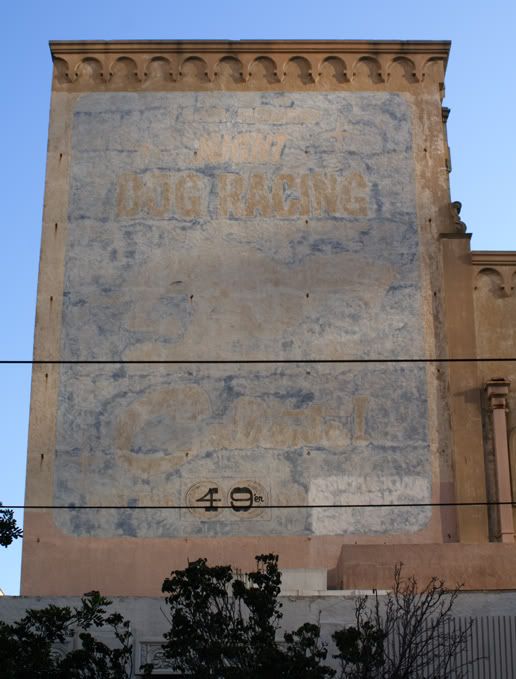
The Caliente dog racing advertisement was painted over. However, a bit still shows through. The race dogs used to chase “‘Pepito,’ the mechanical bunny.” The sport fell out of favor after revelations of inhumane treatment received a lot of press.
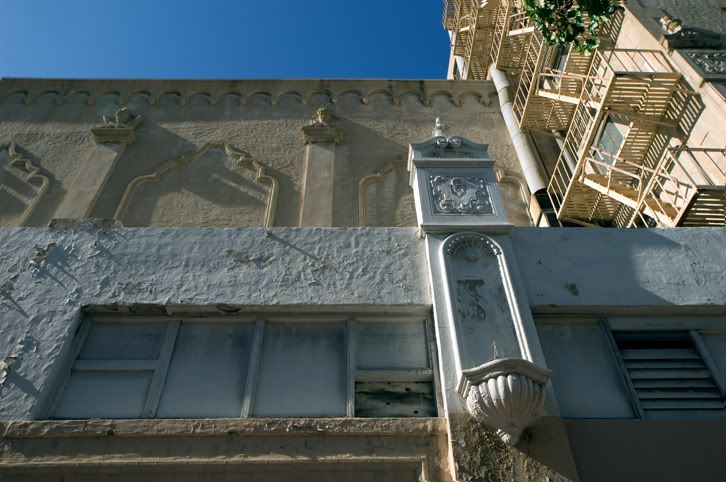
Details of the Spanish Colonial Revival ornament.

Upon opening in 1927 the California was celebrated as “the cathedral of the motion picture” and “an enduring contribution to the artistic beauty of the entire Southland”
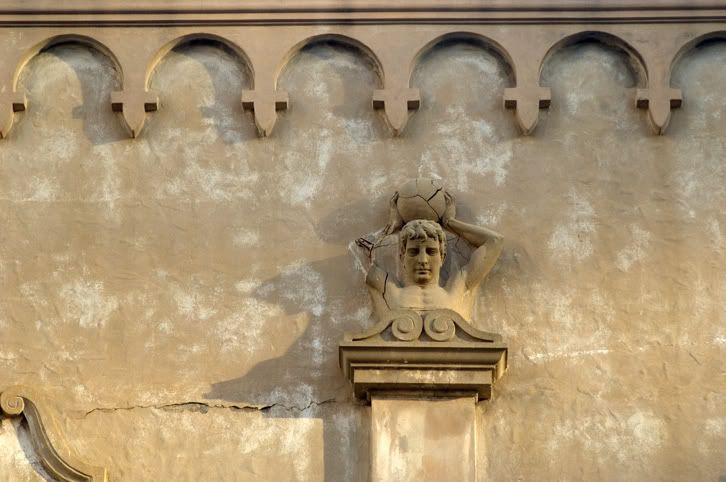
Cracked and broken but still holding strong. Waiting for a developer with a heart, not just a lust for making a buck.

At its grand opening on April 22, 1927, the theatre presented Constance Talmadge and Antonio Moreno in “The Venus of Venice”, Fanchon and Marco’s “Book ideas.”
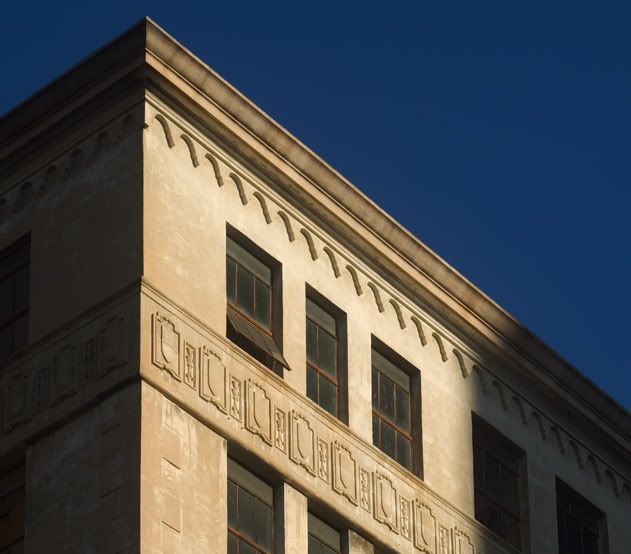
The movies I saw here included several James Bond pictures. I remember seeing a Mel Brooks double feature of The Producers and Blazing Saddles. The California went dark as a movie theatre in 1976.

In 1978 an arson fire destroyed the Old Globe Theater in Balboa Park. The California became the temporary Old Globe Theater during reconstruction.
The interior was decorated in gold leaf and murals. The side walls of the auditorium were inspired by a Spanish church. A huge Wurlitzer organ was also a proud asset. Things were looking up for the California in 1988. A lot of fixing up went on.

It was about that time I saw a concert there. English Beat was the band.

The California’s run as a concert venue was short lived. By 1990 it was slated for demolition. However, the wrecking ball has yet to arrive.

In the mean time it suffers demolition by neglect. Each passing year makes it more impossible for the “beast” to be a beauty ever again. But we can hope for a reverse of fortune.
Historic Photos
California Theatre

“Open All Night” The California in the 1940s

Balcony Staircase

1929

Beatlemania

Reference Source, San Diego Historical Society

Dan Soderberg Photography

Cinder Block Sonata

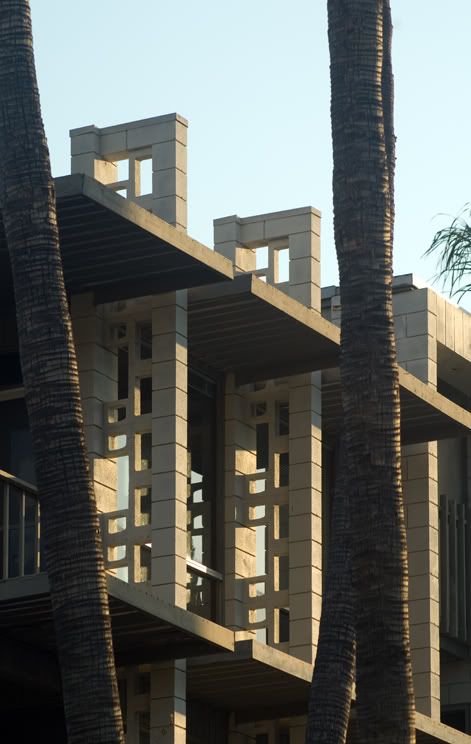
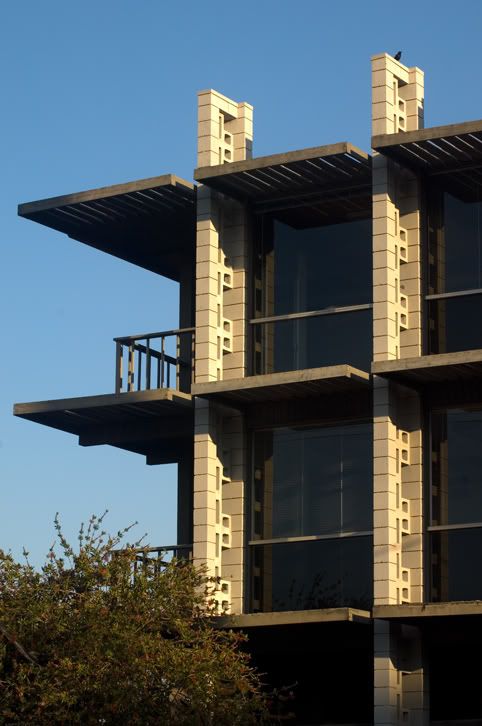
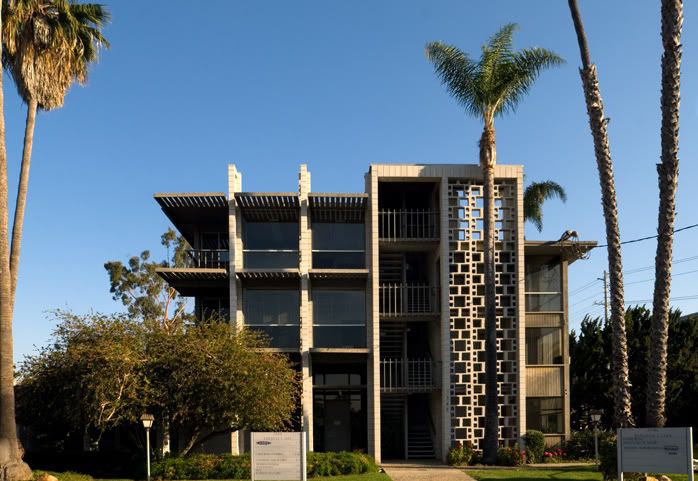
I’m not sure people knew much about Sorrento Valley while construction of interstate 5 was under way in the mid 1960s. By 1971 Sorrento Valley was known for its clusters of industrial parks. There typically isn’t much to get excited about when it comes to industrial park architecture. It is pretty much a cookie cutter genre. But a commission by renown architect Loch Crane broke that mold.

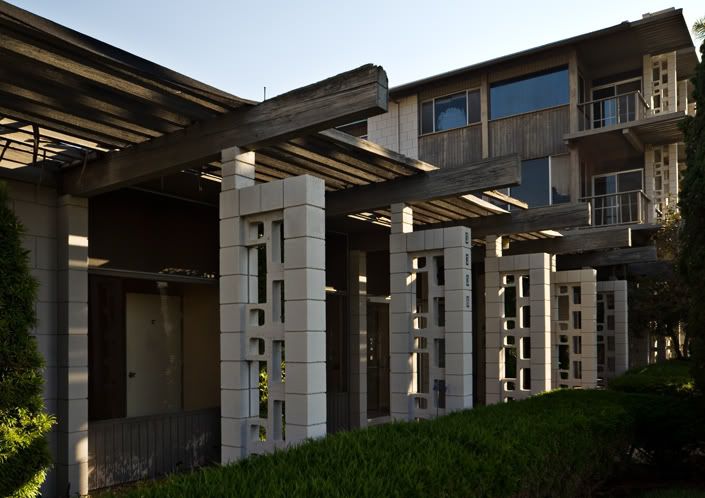
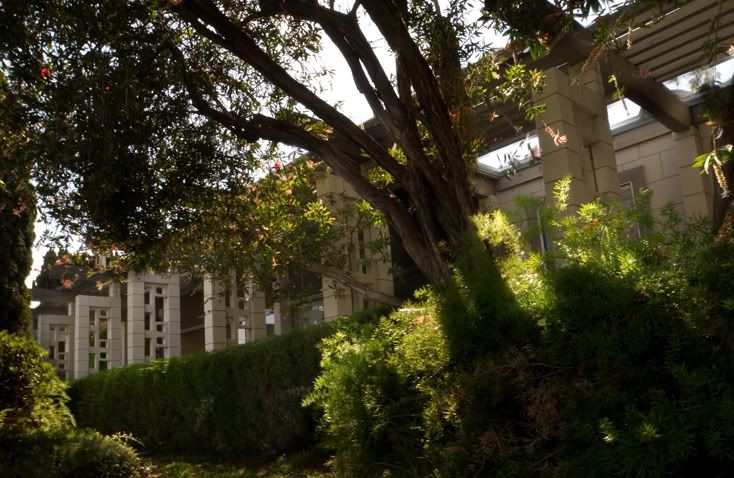
The building is industrial all the way. With exception of wood trim and siding, this is all concrete and cinder block.

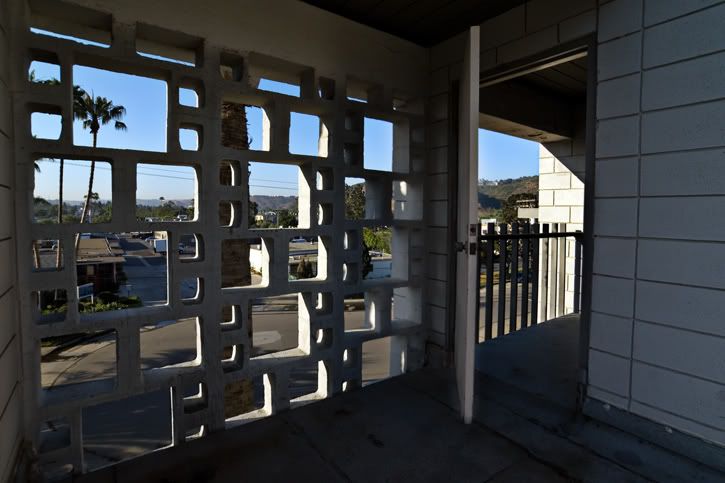
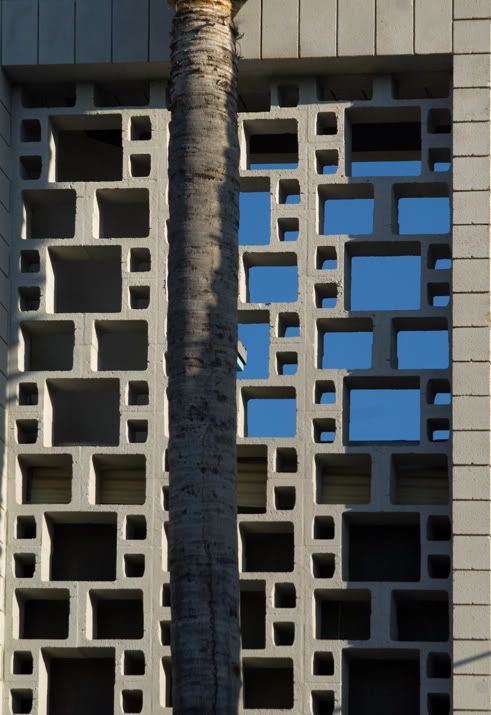
It is the playful use and arrangement of these common materials that sets it apart.

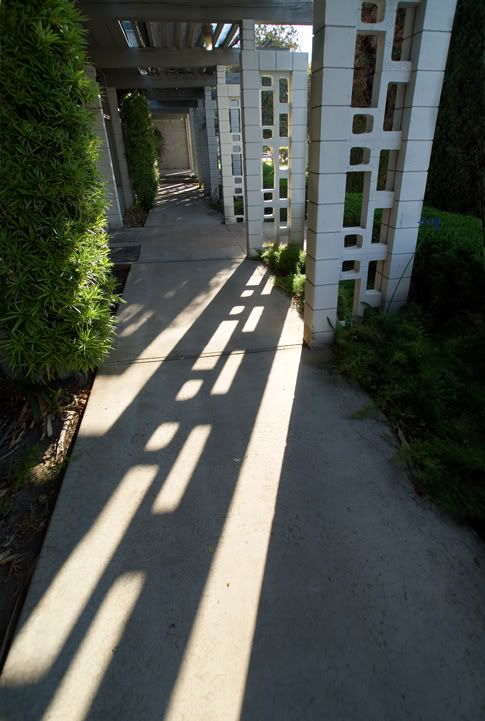
The wooden beam pergola covers the walk way lined by a cinder block colonnade.

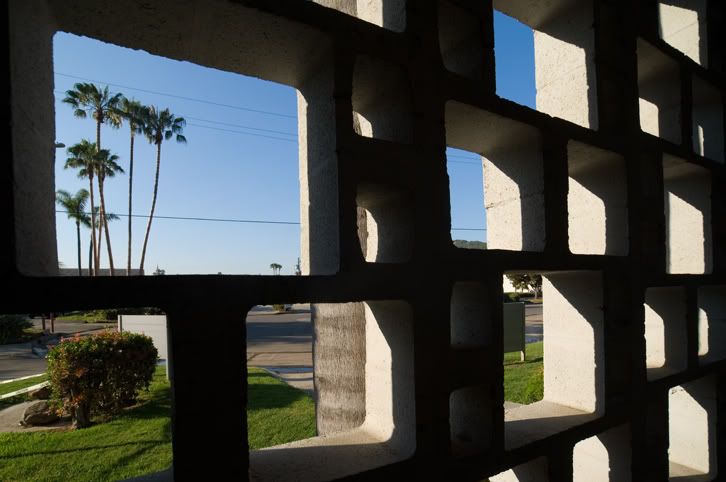
A line of offices have a filtered view through the motif.

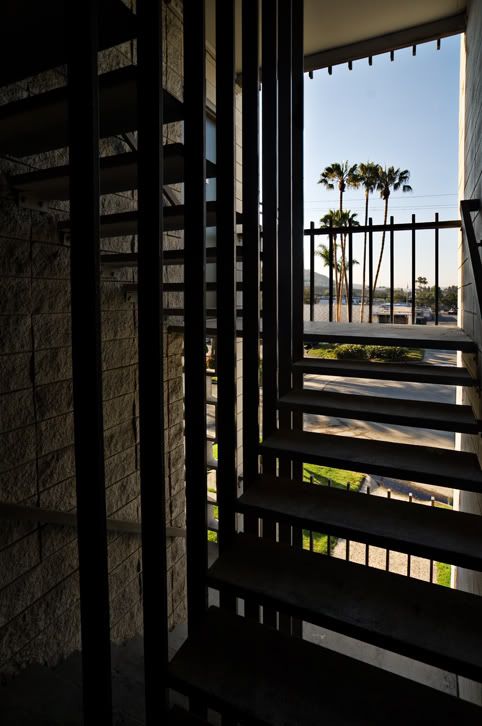
Up the staircase.

From the top floor, a view of the valley filled with buildings not nearly this clever.

A lady who runs a catering business across the street fondly calls this “The Tower.” With exception of the lowly bird sitting atop, not a soul is at “The Tower” any more. The building is slated for demolition. The site is to be scraped for a 24 Hour Fitness facility. “Aren’t we lucky,” said the lady sarcastically.

Behind the tower an industrial portion of the complex still has tenants. I spoke with a gentleman from a company called Car Turner. They build turntables for cars, a lazy susan if you will. To turn your car around by the spin of a platter you park on. Another gentleman in the complex makes surfboards. Both guys spoke of their desire to remain in a building they appreciate and admire. “The way the sun comes through here in the morning is awesome,” they said.

This is another sad story in a book of many. Good and great architecture is looked upon far too commonly as a disposable commodity. Like a car. To be used and finally junked.

Dan Soderberg Photography

Neighborhood Cinema

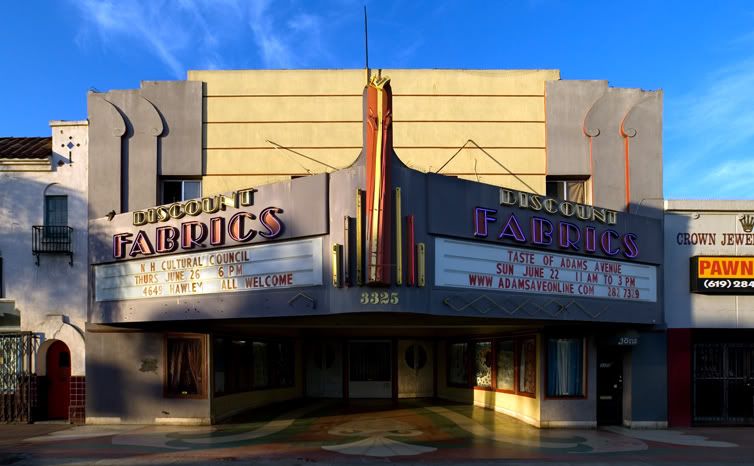
The Carteri, then Adams Avenue Theatre. (1924)

For my neighbor, Mrs. Kahan, this was the neighborhood movie theatre she enjoyed from 1947 when she first moved to Normal Heights.

“After the matinee you could catch a street car on Adams for a nickle and ride anywhere in town to find a place to eat.”

The house went black in 1962. The interior was adapted as retail space. But at least the exterior was kept mostly intact, minus the ticket booth which sat there in the middle. The terrazzo is in fairly good shape, although back in the day these received regular finish to maintain a high gloss. It is a bit dull now. And the display cases that once showed coming attraction posters are still intact. All too often display cases of converted movie theatres are boarded up or covered.  Historic Photo.

I was in Westchester recently visiting my long time friend Kenny Garrett. We walked a few blocks from his house and he showed me what used to be his neighborhood theatre, the Loyola. That neon tower stood some 60 feet high. Note the illuminated display cases. It opened on October 3, 1946. It went dark in the 1980s. The above is a historic photo from the 1970s.

Although the shell of the Loyola remains there are no remaining movie theater elements inside. It is all office space. And what is left outside is a far cry from how it used to look. Someone was in love with shot-crete or stucco. Every inch was plastered with it. Marquee, display cases and the tower.

In the historic photo notice the detailed ornament adorning the plumage rising above the marquee. There’s a discussion in the THEATRE HISTORICAL SOCIETY OF AMERICA’s 1987 annual about the genre of architecture the Loyola belongs to. They refer to it as the “Skouras style,” named after two brothers–Skouras- who managed several cinema chains. Their designer was named Carl G. Moeller. He utilized new technology and materials, namely aluminum to achieve this highly ornate decor inside and out. The result was a style landing somewhere between Art Moderne and Streamlined. The grandiose sweeping and swirling was possible because aluminum was cheap–ornamental forms of aluminum were easy to craft and mass produce. So they went hog wild with flamboyant movie house design.

All that ornamental detail is covered up. All that neon is gone.

I probably don’t need to mention the Swan motif. But I will because the venue was always matched up with films of like theme. The Loyola first ran To Kill A Mockingbird. And the run of Alfred Hitchcock’s The Birds is something people still talk about. “There were several “dead” artificial birds placed along the marquee. Most interesting and clever was the box office where two or three of the birds had been cut in half and pasted to either side of the window, each ‘head’ stuck on the inside with the ‘tail’ on the outside. Tiny ‘cracks’ were painted on the glass. This gave the appearance that the ‘birds had crashed right through!” Mike H.


The terrazzo isn’t too shabby. However I noticed at one end a few spray-painted lines. The kind you see just before a jack hammer shows up.

The Loyola sat 1,234 people. It boasted an army of uniformed ushers and usherettes. There was lots of red velvet. Fancy bathrooms. Fancy snackbar. Stadium seating in back. This show had it all.

Dan Soderberg Photography

Neighborhood Library

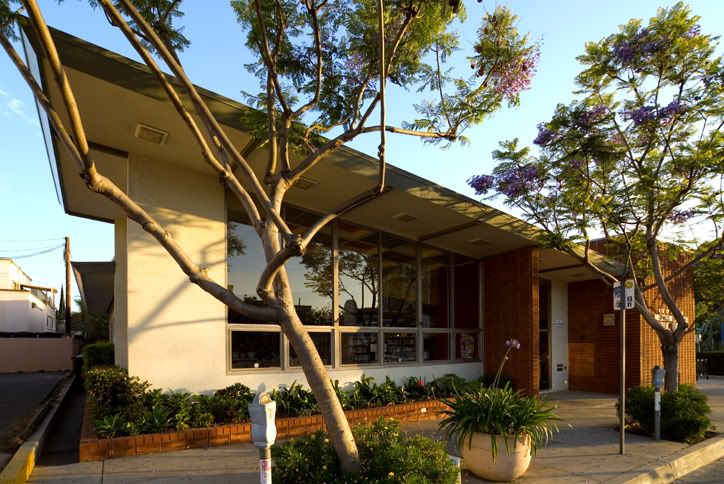
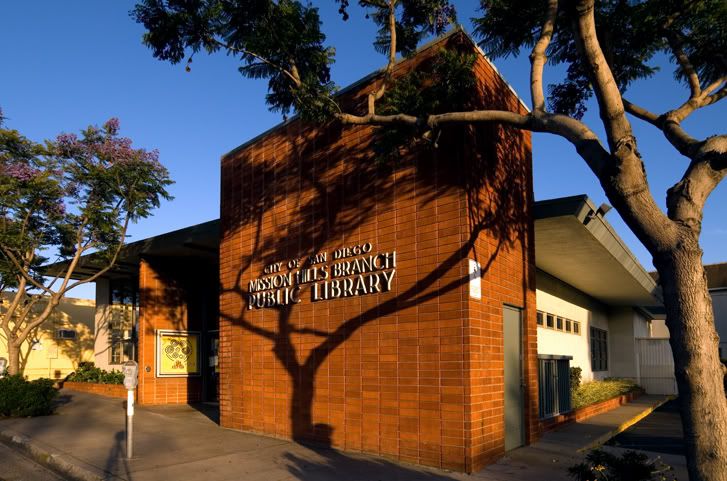
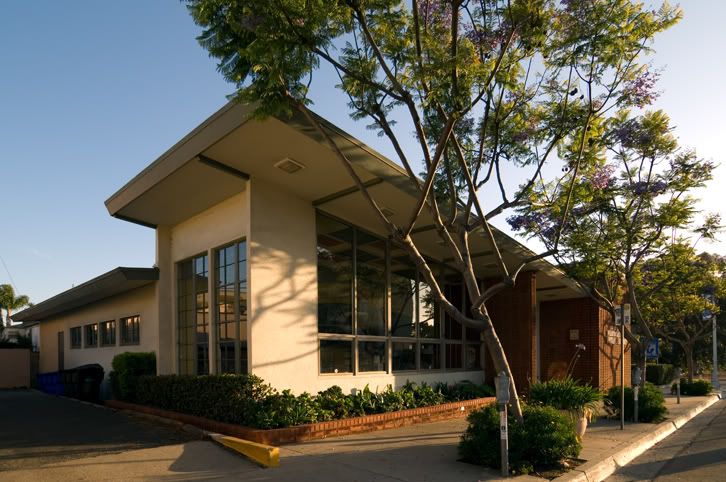
The Mission Hills Library is not unlike the first library I ever knew in National City. Both employed brick and lots of window glass. They had different roofs though. National City’s roof had a lower profile. The Mission Hills Library roof almost takes flight.

National City’s mid century library closed years ago. That South Bay city can boast having a fine looking slick modern library. San Diego on the other hand limps along with a collection of libraries that have been way too small for a very long time. It is a city that has pumped hundreds and hundreds of millions of tax payer dollars into sports stadiums and guaranteed purchases of unbought Chargers tickets. For Petco Park alone the city will be playing to the tune of eleven million dollars a year until 2037. Mean while the city has been unable to fund its employee’s pension program, maintain its infrastructure, or to build modern libraries, especially a central library.

Still, the days are numbered for this little jewel. It may have outlived its usefulness as a library, but this is a smart looking warm friendly structure that can live on wonderfully serving some other purpose. It astonishes me to hear the number comments people make while I shoot old buildings. “What are you doing that for? I can’t wait for the bulldozers to knock this down!” I would have thought library patrons might have more sense of history and culture–especially about the library that served them so well, so long.

And its not as if the new library needed this land. The plans are in place for a new library to be built up the street. Maybe I should have asked “what’s the big hurry to scrape this little library for a six story faux Spanish strip mall deluxe loaded with condos and anchored at ground level by Starbucks? You can get that by walking down the street a few blocks. And plenty more a few blocks after that.”